 EN
EN






Preparing for your baby's check-up: a calm checklist
Check-ups are over quickly, and the question that mattered most often comes back on the way home. A few minutes of preparation help you walk in more relaxed.
Why preparing for your baby's check-up helps
Preparing for your baby's check-up is not about learning anything or getting it right. It simply makes room for your own questions. Whether it is a health visitor review in England or a well-child visit in the US, the professional will ask how things are going, and you can ask back.
With a baby, that is easier said than done. The appointment lands in the middle of a nap, your baby cries while being undressed, and the question you have been carrying around for days is suddenly gone. A note on paper or on your phone takes that pressure off.
Which appointment is coming up next depends on where you live. See our overviews of baby health reviews in England and the US well-child visit schedule.
What to bring to your baby's check-up
In the UK
- The red book. Your baby's personal child health record. The NHS recommends taking it with you every time you visit the baby clinic or GP, and the health visiting team records each review in it.
- The ASQ-3 questionnaire, if you were sent one. For the 1 year and the 2 to 2½ year review, the NHS says you will usually receive it to fill in at home beforehand.
The first reviews, before birth, after the birth and at 6 to 8 weeks, usually take place at your home. Then there is nothing to pack at all, just the red book to hand.
In the US
- Your child's vaccine record. The CDC recommends bringing it to each doctor visit and asking the doctor or nurse to write down the vaccine, date and dosage.
- Records from the birth. For the early visits, MyHealthfinder suggests bringing medical records and newborn screening results.
Useful everywhere, though not officially required: your list of questions, a note of any medicines or supplements your baby is currently given, and whatever you normally take for changing and feeding.
Write down your questions beforehand
Write questions down as soon as they come to you, not the evening before. Shortly before the appointment, put them in order: the most important one first. The AAP suggests bringing your top three to five questions and raising them at the start of the visit, so the important things are covered even if time runs short.
MyHealthfinder also suggests talking to other people who look after your baby before the appointment. A partner, a grandparent or a childminder often notices something you did not.
A few open questions that fit almost any check-up:
- What are you looking at in this check-up?
- Is there anything we should keep an eye on before the next appointment?
- We noticed something about feeding, sleep or play. Can we talk about it briefly?
- When is the next check-up, and should we book it now?
You do not need to justify any question. "Is this usual at this age?" is a perfectly good question too.
Note what you observe: describe, don't judge
You will probably be asked how the last few weeks have been. That is hard to answer from memory. What helps is what you actually noticed, in plain words and with a time frame. There is no need to rate it.
| Topic | Rather this | Than this |
|---|---|---|
| Sleep | For the last two weeks, usually awake two or three times a night. | She sleeps badly. |
| Feeding | For a week, shorter breastfeeds, but more often. | He isn't feeding properly. |
| Nappies | Since starting solids, the poo looks different. | Something's wrong with the nappies. |
| Changes | For about a week, he has taken longer to fall asleep in the evening. | He's somehow different. |
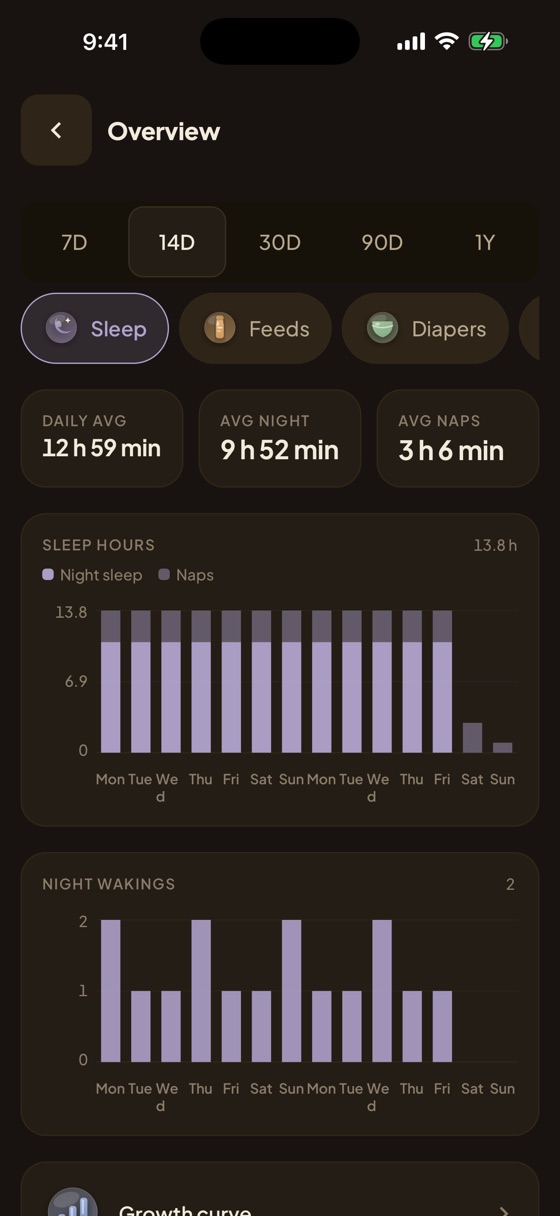
Descriptions give the professional a clear picture, and the assessment stays with them. If you already log feeds, sleep and nappies, you have the numbers to hand, for example with a breastfeeding log.
Appointment preparation in Heia
Heia has an appointment preparation built in. Your first preparation is free and does not need Heia Plus; further preparations are part of Heia Plus. When a check-up is coming up, you find it on the check-up card under "Prepare for the appointment", and at any time in Settings under "Prepare an appointment". It works for the GP or paediatrician as well as for the health visitor, the midwife or a lactation consultant.
What you enter
- Who the appointment is with.
- Which topics matter to you. Heia suggests topics that fit your child's age, such as sleep, feeding, or vaccinations and check-ups.
- Your own questions, in any order. You move the most important one to the top.
What Heia adds
From your entries, Heia summarises what fits the appointment: feeds, nappies, sleep, growth measurements, medicines given and milestones, each with the time period and how completely it was logged. You decide which of these summaries go into the report. Preparation works without many entries too; the report is then built mainly from your answers.
What you get
- A compact report for the professional, ideally no longer than two pages. It shows separately what comes from Heia entries and what you added for this appointment.
- A version "For me" with a short "Don't forget" list. In England and Scotland the red book is on it; in the US, your child's health or vaccination records.
- You can show the report on your phone, share it as a PDF or print it. The report language can be chosen independently of the app language.
Your draft stays on your device, and you can stop and carry on later. After the appointment, Heia offers a short look back: "Did you cover everything?" There you can tick off what you were able to raise and keep a note. It stays with you and never appears in a report.
Heia summarises what you have logged and does not assess anything. The assessment stays with the health visitor or doctor.
What should I take to my baby's check-up?
In the UK, the red book, and the ASQ-3 questionnaire if you were sent one. In the US, your child's vaccine record, plus birth and newborn screening records for the early visits.
How many questions should I bring?
The AAP suggests your top three to five, raised at the start of the visit. Write down more if you like, but put the most important first.
Does the appointment preparation in Heia cost anything?
Your first appointment preparation with PDF is free for everyone, without Heia Plus. Further preparations are part of Heia Plus.
Do I need lots of entries in Heia for the preparation to work?
No. With entries, Heia summarises the last days or weeks. Without them, the report is built from your answers and questions.
Sources
- NHS: Your baby's health and development reviews (red book, ASQ-3 questionnaire)
- GOV.UK (OHID): Delivery of the Healthy Child Programme, Part 2: health visiting, ages 0 to 5 (updated 12 March 2026)
- HealthyChildren.org (AAP): AAP Schedule of Well-Child Care Visits
- U.S. Department of Health and Human Services (ODPHP), MyHealthfinder: Make the Most of Your Baby's Visit to the Doctor (Ages 0 to 11 Months)
- CDC: Keeping Track of Records (vaccination records for children)
Heia describes and puts things in context, but it does not diagnose. If you have questions about your child, please talk to your GP, health visitor, midwife or paediatrician.